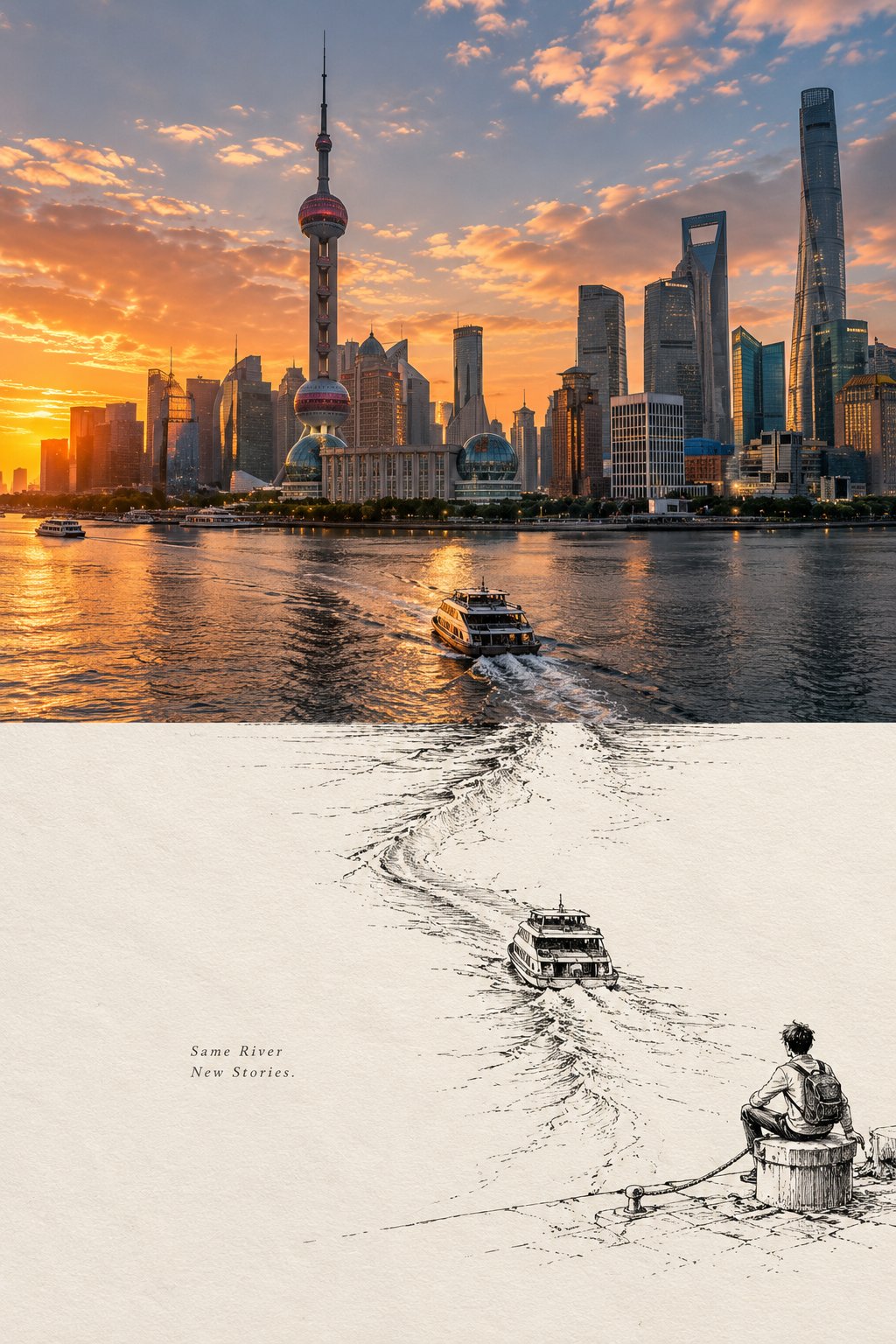
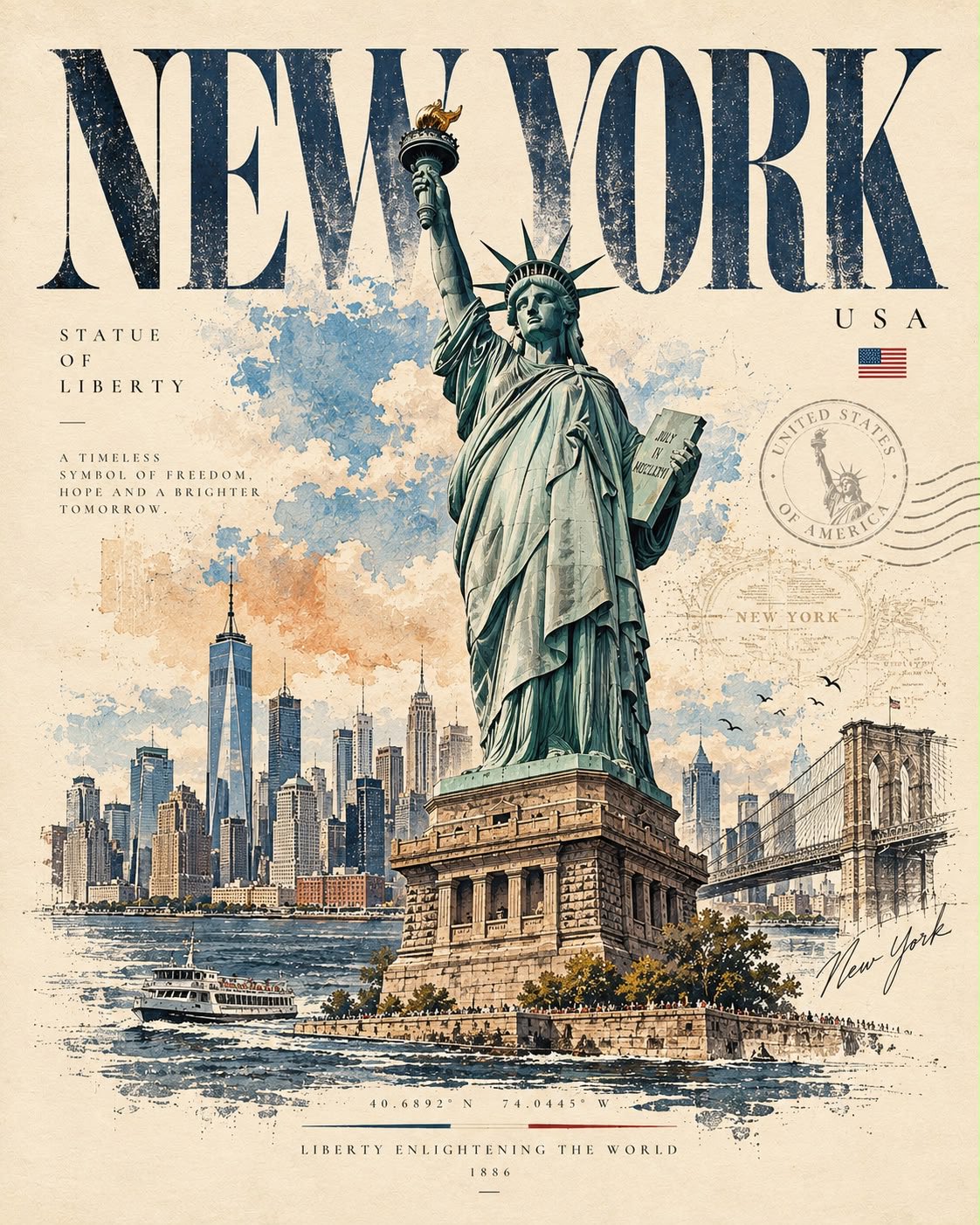
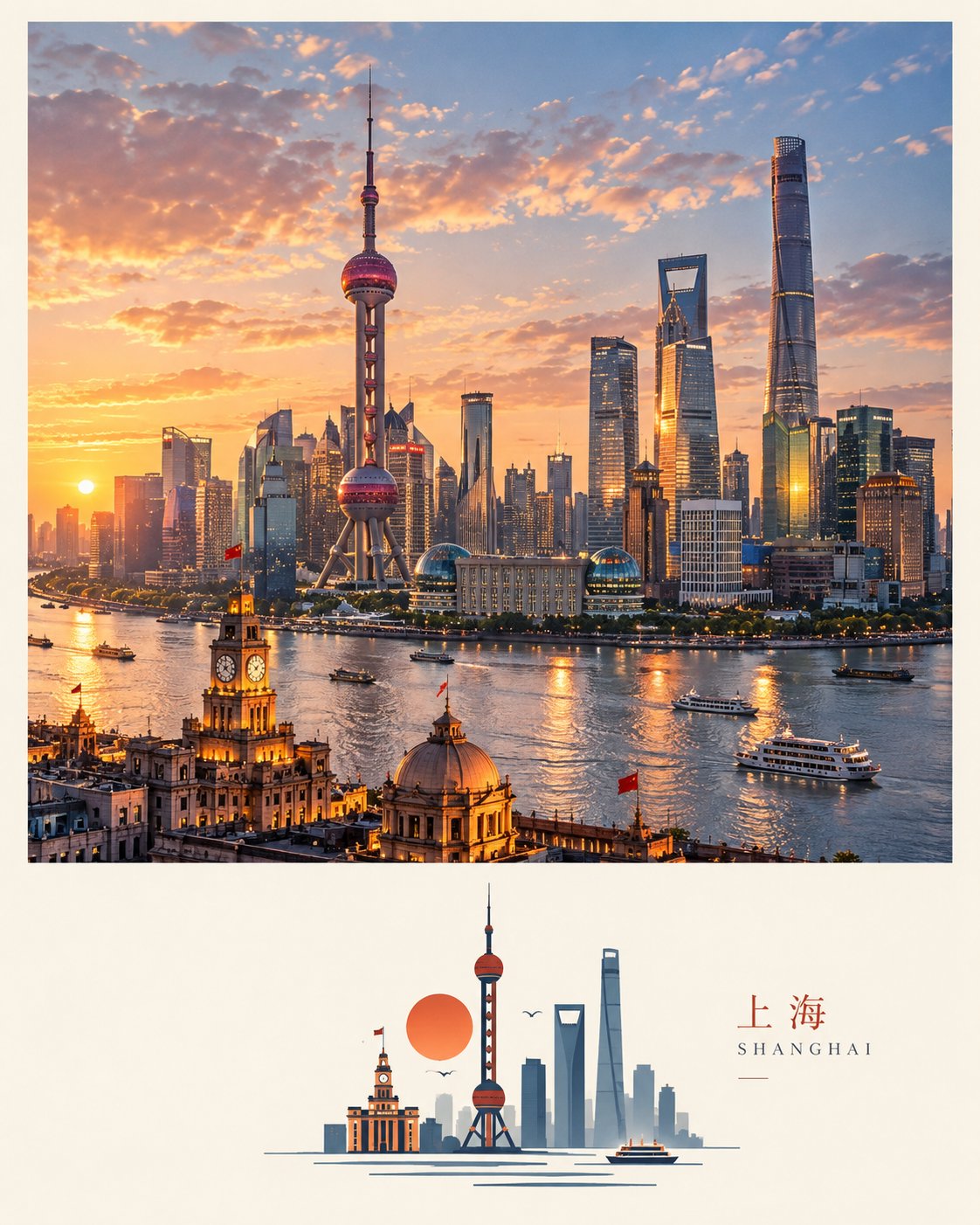
Create an exceptionally original minimalist architectural art poster featuring [LANDMARK] in [CITY, COUNTRY].

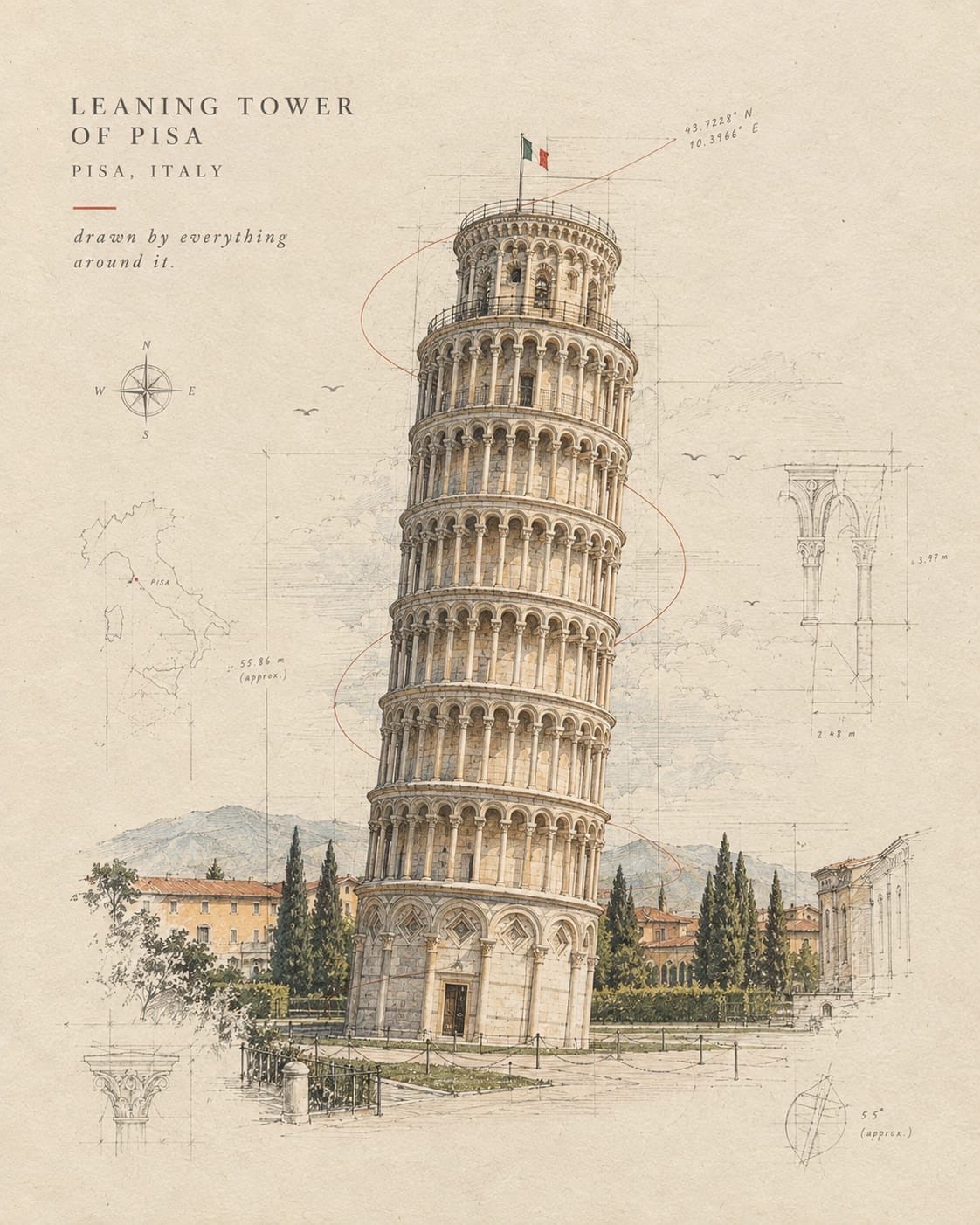
Depict the landmark in its recognizable natural architectural appearance, with its authentic proportions, distinctive structure, materials, and characteristic details. Combine fine graphite architectural drawing with subtle vintage watercolor washes, creating the feeling of a sophisticated illustrated travel archive.

The landmark should be the central visual focus, surrounded by an intricate but restrained world of extremely delicate architectural linework: construction measurements, perspective guides, tiny streets, rooftops, surrounding buildings, local landscape, clouds, birds, shadows, fragments of maps, compass marks, elevation studies, structural details, and subtle environmental contours.

Use a layered visual language where some elements are highly detailed while others fade into the paper, creating depth without making the composition feel crowded.

Add one unexpected artistic detail: a single continuous pencil line travels around the landmark without directly tracing its outline. Allow it to occasionally intersect with construction lines, then break at one point beside a tiny handwritten coordinate, date, measurement, or architectural note.

Use warm ivory handmade paper, graphite pencil, extremely fine ink lines, delicate watercolor washes, subtle eraser dust, visible paper fibers, faint halftone imperfections, soft natural shadows, and lightly weathered archival texture.

Color palette

Keep the overall artwork muted, sophisticated, and vintage. Use warm ivory and graphite as the foundation, with the landmark shown in its authentic recognizable colors through restrained watercolor washes.

Add one subtle accent color inspired by [CITY/COUNTRY] — for example:

- Italy → muted terracotta
- Japan → restrained vermilion
- France → faded blue
- UK → muted navy or burgundy
- India → subtle saffron
- USA → muted teal or dusty red

Avoid bright digital colors.

Surrounding details

Include carefully chosen elements associated with [CITY/COUNTRY], such as:

- local architecture
- landscape or geography
- streets and rooftops
- transportation
- vegetation
- small cultural details
- map fragments
- architectural ornaments
- elevation or measurement diagrams
- compass rose
- coordinates
- faint historical annotations

These details should frame and contextualize the landmark rather than compete with it.

Typography

Place small, refined typography in generous negative space:

[LANDMARK NAME]
[CITY, COUNTRY]

“drawn by everything around it.”

Use elegant editorial serif typography with generous spacing. Add only a few tiny handwritten architectural annotations or coordinates.

Artistic direction

The final composition should feel mysterious, intelligent, timeless, and unexpectedly beautiful — somewhere between a vintage European travel poster, an architect's working sketch, a museum exhibition print, and a collector's archival illustration.

No people.
No photorealistic background.
No excessive typography.
No decorative clutter.
No neon colors.
No glossy digital rendering.
No cartoon aesthetic.
No generic stock-travel-poster appearance.