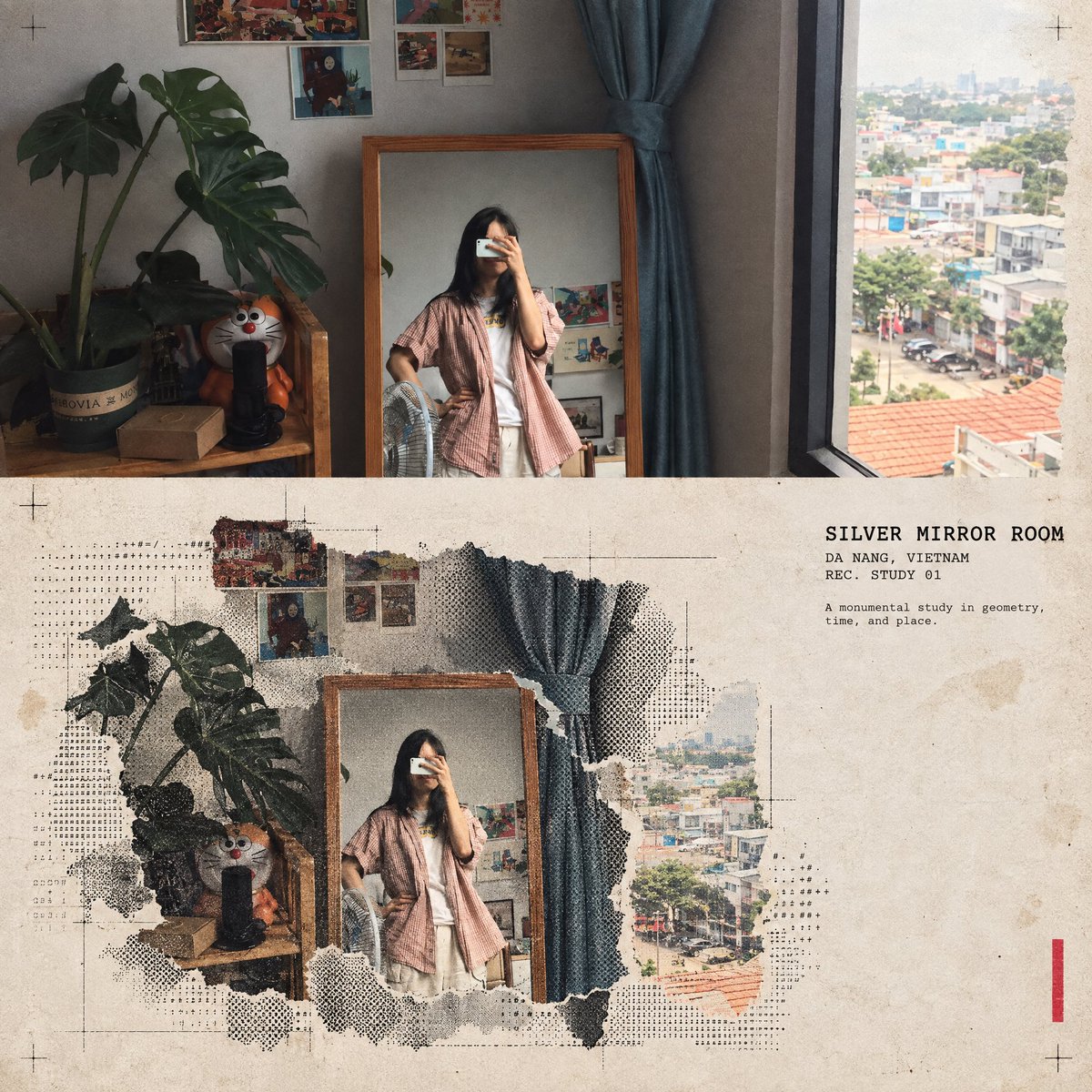
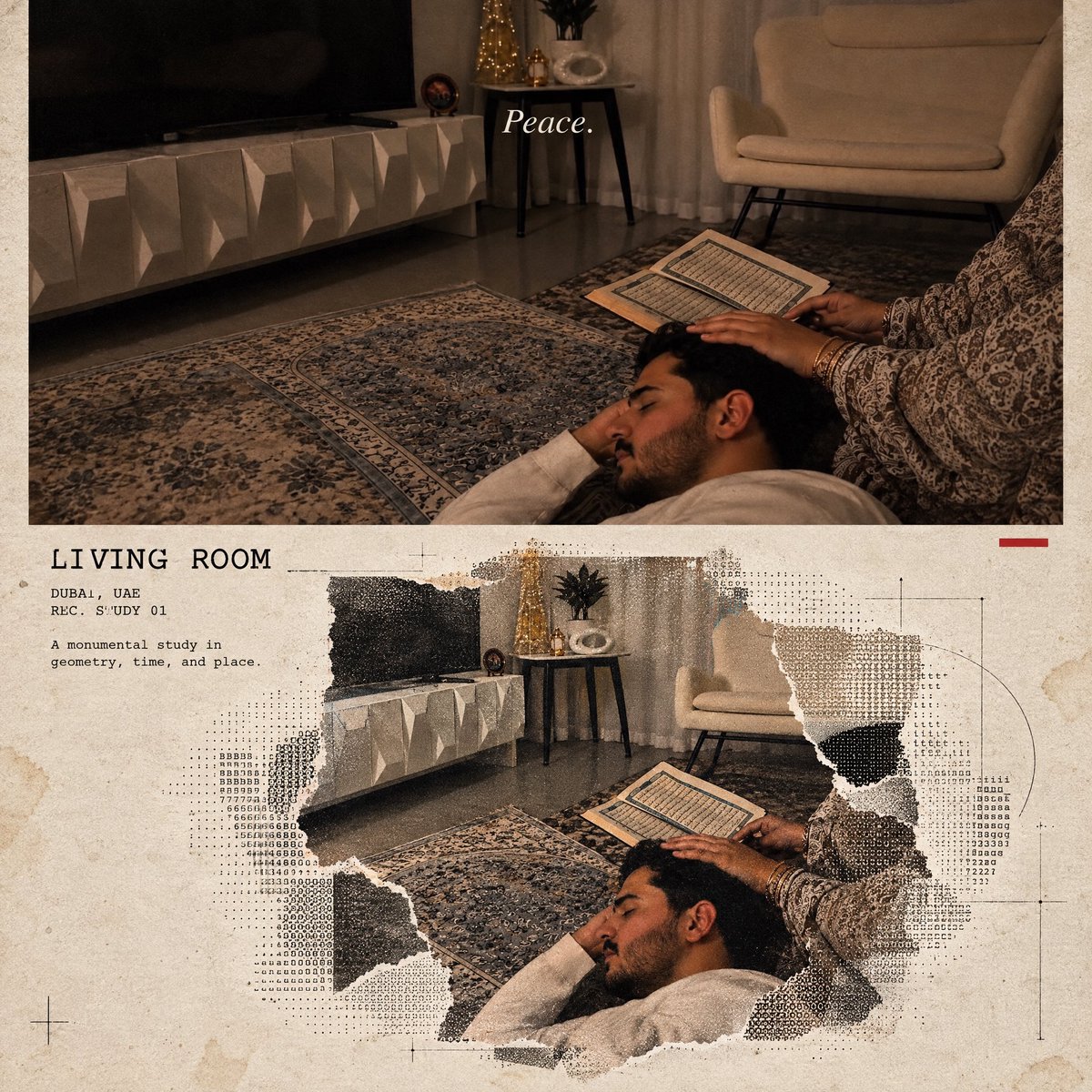
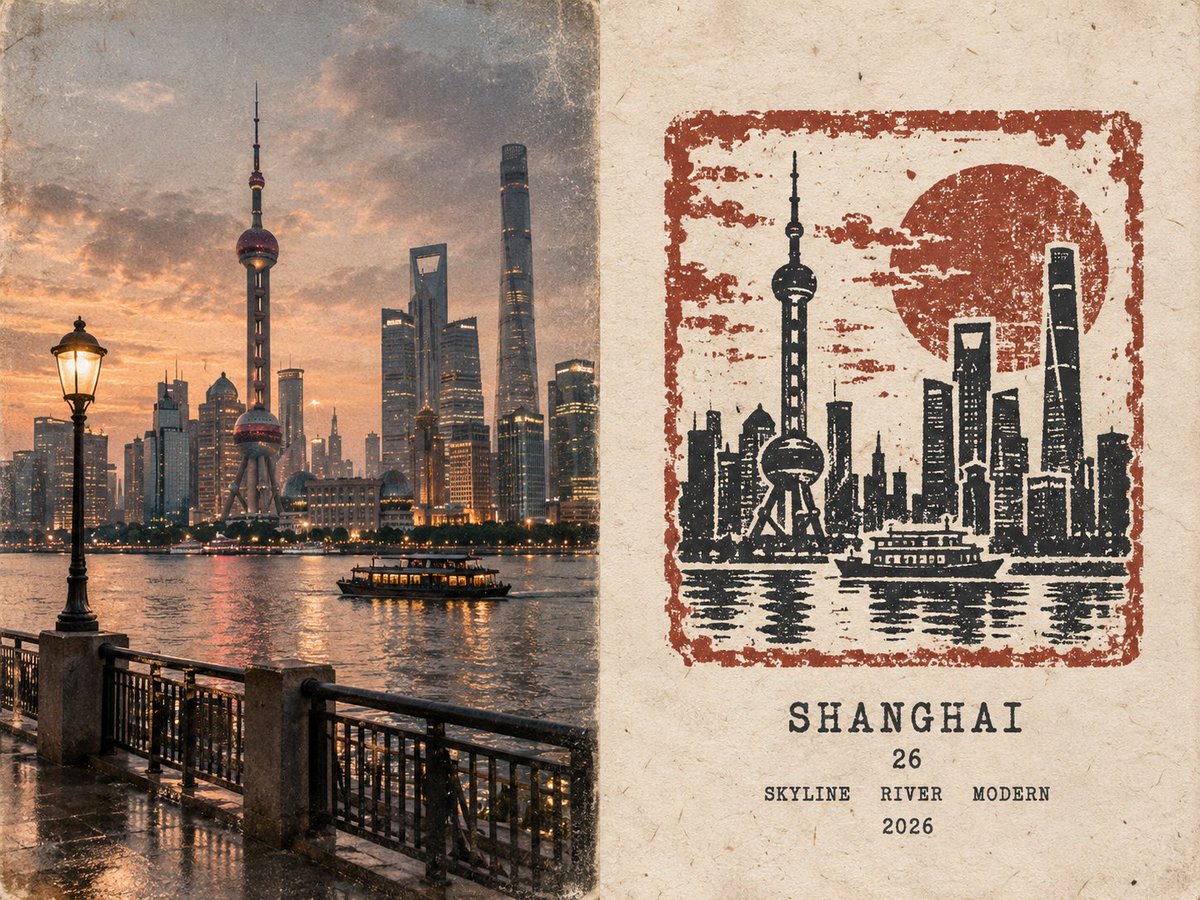
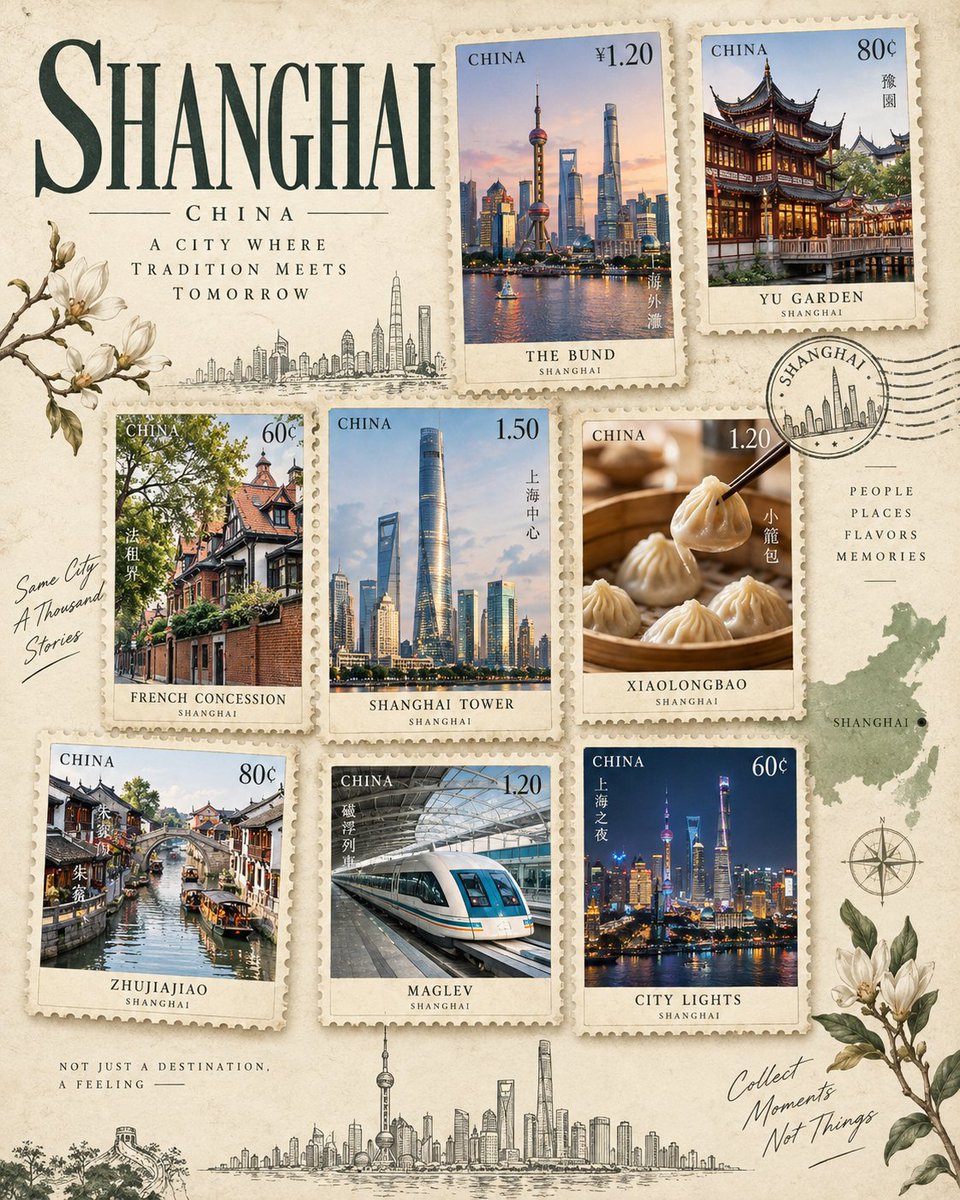
Turn this structure photo into a single high-end halftone architectural travel-collage poster. Output one poster per uploaded photo — never merge multiple structures or photos into one frame.

FORMAT

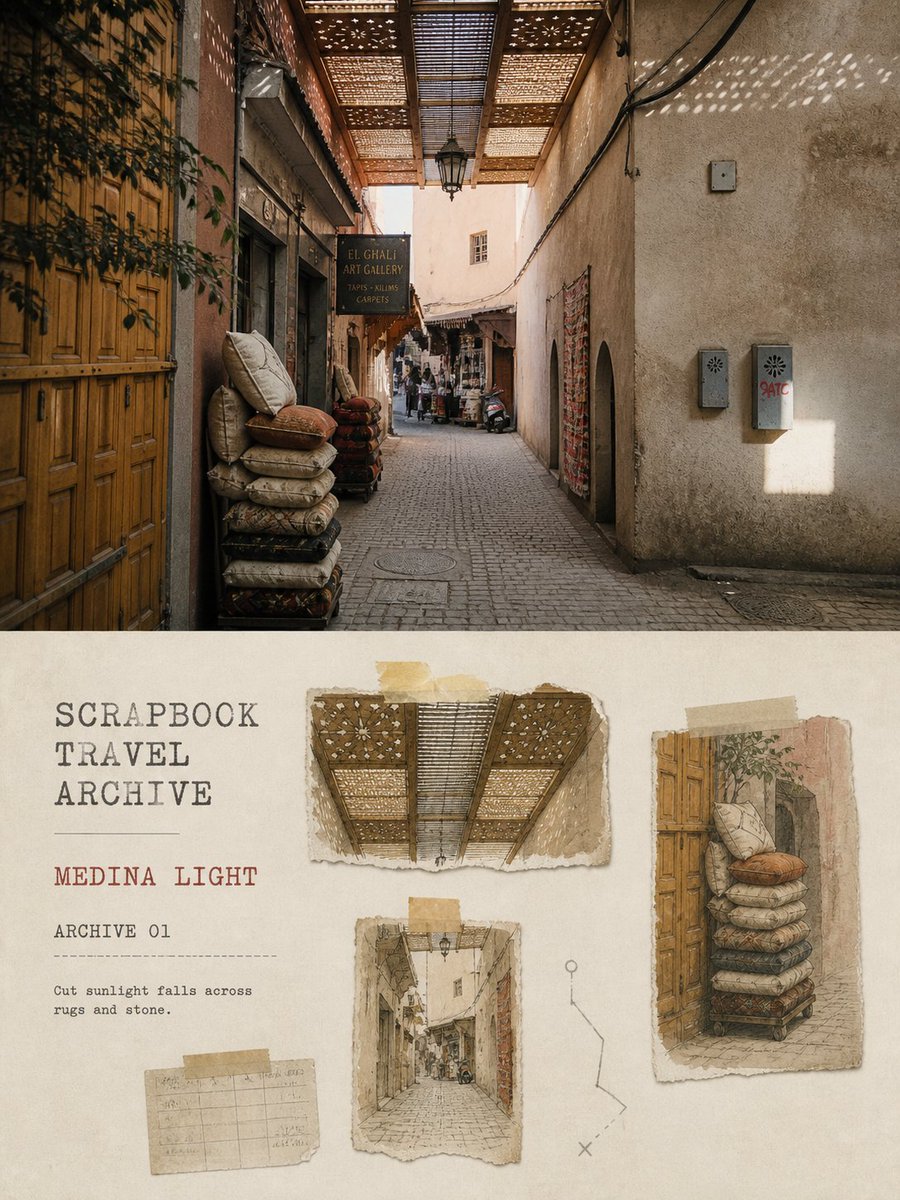
3:4 vertical canvas. Split into two roughly equal zones — real architectural photo on top, printed reconstruction below — divided by one clean, sharp horizontal line.

Do not stretch, warp, tilt, or unnaturally reposition the structure to force the proportions.

TOP HALF — THE REAL SHOT

Preserve the original structure faithfully: same architecture, proportions, perspective, distinctive details, surrounding elements, natural light and shadow, and original color mood.

Keep recognizable features such as:
* façade
* windows and arches
* towers or domes
* doors and structural details
* roofline
* surrounding landscape or street elements

Add only a subtle high-end color grade and the faintest film grain. Do not redesign or reinterpret the architecture.

BOTTOM HALF — THE PRINTED RECONSTRUCTION

Rebuild the same structure as an experimental printed architectural collage using:

torn photographic fragments + fixed-width ASCII character fields + photocopy halftone dots + architectural linework.

The structure must remain immediately recognizable.

* Torn-edge photographic fragments preserve the most important architectural details.
* Brick, stone, glass, metal, shadows, windows, and surrounding textures gradually dissolve into ASCII fields and halftone patterns.
* Thin architectural line drawings (plans, sections, elevations) overlay or interweave with the collage.
* Use a restrained palette: warm paper white, ink black, one muted accent color (terracotta, ochre, slate blue, or sage green).

TYPOGRAPHY & LAYOUT

* Small monospace caption near the bottom: building name, city, year.
* Generous margins, editorial poster balance, no decorative clutter.
* Halftone dots should feel analog and printed, not digital.

MOOD

Sophisticated architectural travel poster — part Bauhaus documentation, part analog print studio, part experimental graphic design. The result should feel like a limited-edition art print you would buy at a museum shop.