Anamnesis

Prompt:

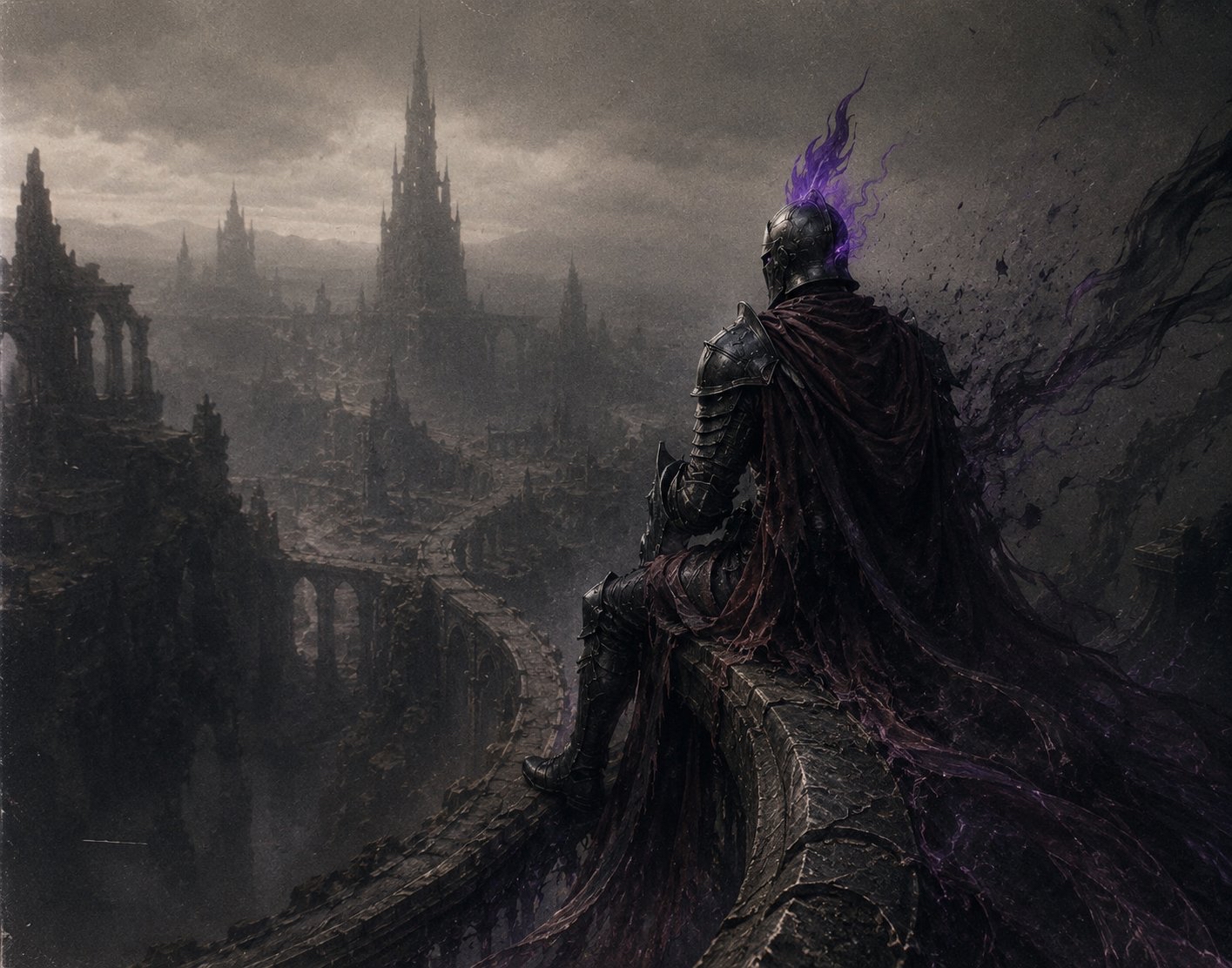
Create one **hyper-realistic surreal environmental portrait** using the supplied image as the absolute authority for the character’s identity and visual world.

Capture it as if photographed with an **11×14-inch large-format film camera in landscape orientation**, using a native **14:11 aspect ratio**. The result must look physically photographed, not illustrated, animated, painted, or rendered in CGI.

The character is unmistakably adult.

IDENTITY LOCK

Preserve the character’s exact:

* Identity, species, anatomy, limb count, proportions, and silhouette
* Facial structure, hairstyle, head shape, and expression language
* Pigmentation, scars, tattoos, markings, and asymmetry
* Horns, ears, tails, wings, fins, claws, prosthetics, cybernetics, armor, masks, visors, helmets, jewelry, and permanent accessories
* Materials, palette, motifs, and source-specific design language

Do not humanize, simplify, relocate, remove, conceal, replace, or redesign identity-defining traits.

Preserve the original eye state exactly. Closed or concealed eyes remain closed or concealed. Never invent or reveal features beneath coverings.

Do not copy the source pose, outfit, background, composition, camera angle, or rendering medium.

POSE

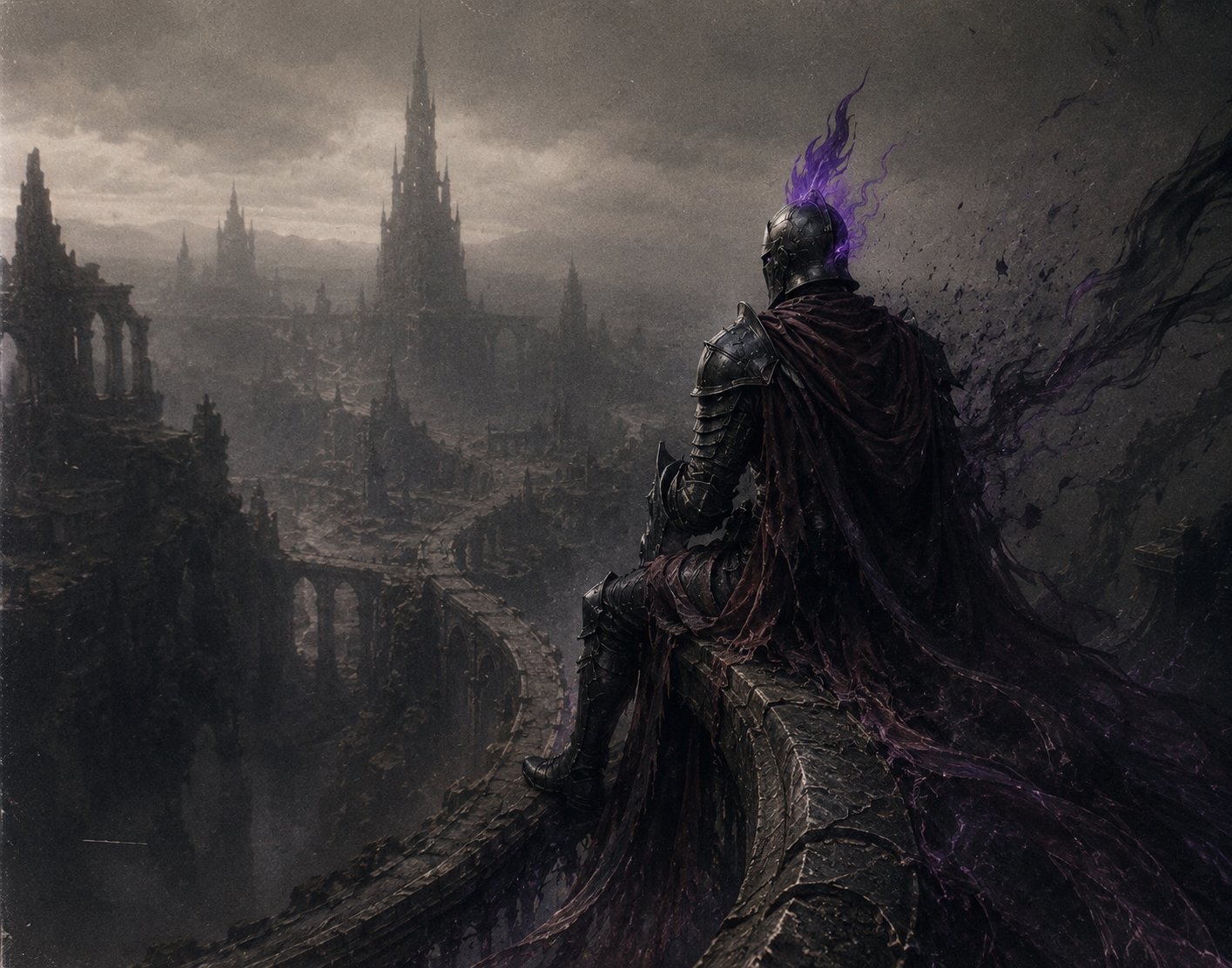
Seat the character upright on a narrow curved environmental structure in a long **rear three-quarter pose**, facing away toward the left.

This is primarily a back view. Emphasize the back, shoulders, waist, hips, and descending upper legs.

Keep the torso long, relaxed, and slightly inclined forward with a natural spinal curve. Turn the head subtly left and downward, revealing only a narrow glimpse of the cheek, jaw, mask edge, visor, muzzle, or equivalent anatomy.

Do not show a full profile or camera-facing gaze.

The pelvis rests securely on the support. Keep the hips slightly closer to camera than the shoulders, forming a restrained reverse S-curve.

Both legs descend toward the lower-left or lower-center, with knees below the waist and away from the chest.

Both arms stay forward near the lap or far side. No arm may brace behind the body.

Preserve all required limbs and adapt the seated pose naturally to non-human anatomy without forcing humanoid proportions.

COMPOSITION

Use a strict **14:11 landscape frame**.

Place the character in the right third, occupying roughly 30–40% of the image. Position the head in the upper-right quadrant and let the body, fabric, support, and fusion descend toward the lower-center or lower-left.

Open the left two-thirds into an immense source-derived environment with clear foreground, middle ground, background, and atmospheric distance.

Create a strong visual pathway from the seated support into the center-left background. Keep the left-side viewing corridor open.

Use a high viewpoint behind and slightly above the character, looking outward and downward. Apply a restrained Dutch angle and moderate wide-angle framing without anatomy distortion.

ENVIRONMENTAL FUSION

Fuse the character gradually into the environment without suggesting wounds, mutilation, amputation, trapping, or impalement.

Begin with intact anatomy, then introduce source-derived seams, patterns, and material changes that develop into dimensional structures and finally merge with the environment.

Include at least one major fusion between the pelvis, hip, thigh, tail, lower body, or equivalent anatomy and the seated support.

A second fusion may extend from the shoulder, upper back, hair, headpiece, wing, tail, prosthetic, or equivalent structure into the right-side environment.

Keep every transition structurally readable, physically connected, and materially coherent.

CLOTHING

Do not copy the source outfit.

Use delicate flowing sheer or translucent fabric where appropriate, maintaining tasteful, non-explicit coverage. Let it wrap naturally around the hips, pelvis, torso, upper legs, or anatomical equivalent and trail across the support.

**For male characters, do not generate upper-torso clothing or fabric coverage. Keep the chest, abdomen, shoulders, and back free of added garments, wraps, straps, or drapery, except for identity-defining armor, cybernetics, prosthetics, or permanent coverings preserved from the source.**

Derive its colors, texture, pattern, and material behavior from the source image.

It may transition into source-derived mist, ribbons, roots, filaments, cables, smoke, liquid, feathers, crystals, membranes, webbing, or tracery.

Do not obscure identity-defining anatomy, markings, prosthetics, cybernetics, tails, wings, armor, or coverings.

No generic lingerie, underwear, censor shapes, or unnaturally attached fabric.

LARGE-FORM PHOTOGRAPHY

Simulate a genuine 11×14 large-format photograph with:

* Controlled perspective and minimal distortion
* Natural optical falloff
* Subtle focal-plane control
* Strong detail on the head, back, hips, support, fabric, and fusion points
* Reduced contrast and detail in the distance
* Believable lens softness rather than synthetic blur

Every surface must have realistic weight, scale, texture, reflectivity, translucency, shadow, and physical contact.

FILM CHARACTER

Create a heavily aged analog-film appearance, as if the negative were pushed, duplicated, chemically mishandled, poorly stored, and later scanned.

Apply:

* Heavy irregular silver-halide grain
* Coarse grain clustering in shadows and midtones
* Strong desaturation and muted chroma
* Slightly contaminated blacks and compressed highlights
* Uneven negative density
* Fine scratches, dust, emulsion wear, and chemical streaking
* Minor edge fogging and restrained light leaks
* Slight color-layer misregistration
* Gentle fading and imperfect archival scanning

The damage must feel random and physically embedded in the film.

Do not use uniform digital noise, VHS artifacts, excessive vignette, fake sprocket holes, decorative scratch overlays, or extreme film burns.

Preserve identity, anatomy, pose readability, and environmental depth.

LIGHTING AND MATERIALS

Use the supplied image as the authority for lighting color, temperature, contrast, glow, shadows, reflections, and mood.

Translate these into physically believable illumination.

Use fog, dust, haze, particles, fragments, and light shafts only when supported by the source and without blocking the left-side environment.

Render all skin, fur, scales, feathers, metal, glass, armor, fabric, stone, crystal, prosthetics, and cybernetics with realistic material behavior.

Avoid generic gold light, neon accents, chrome, magical energy, or cinematic teal-and-orange grading unless present in the source.

The final image should feel intimate, contemplative, surreal, immense, weathered, immersive, and unmistakably grounded in the supplied image.

HARD NEGATIVES

No front-facing pose, full side profile, centered figure, standing, kneeling, crouching, reclining, curled posture, raised knees, camera-facing gaze, or rear arm support.

No blocked left-side view, close crop, flat background, fisheye distortion, extreme foreshortening, warped anatomy, enlarged foreground body parts, or loss of scale.

No copied outfit, generic lingerie, unrelated motifs, humanization, missing or extra limbs, duplicated anatomy, fused hands, broken joints, impossible posture, cut-off anatomy, intersecting structures, wounds, gore, mutilation, or exposed internal anatomy.

No anime, manga, illustration, cel shading, graphic linework, concept art, painterly rendering, matte painting, CGI, game-engine surfaces, plastic skin, excessive HDR, artificial bokeh, oversharpening, or clean digital perfection.

No excessive fog, fake film borders, repeated scratches, text, captions, logos, signatures, or watermarks.

SINGLE PASS

Create exactly one image.

The initial generation is the final deliverable. Do not automatically edit, refine, redraw, restyle, enhance, upscale, or regenerate it. Any later change must come from a separate explicit edit request.

@UnholyWandering @supaipaii @AquariaCelestia @RaynTarant
Made with AI
1.7K